
Recognition and Apologies: Renewed Interest in Indigenous Taiwan

Updated: Apr 4, 2025
On one of my trips to Taiwan, just before the COVID pandemic broke out, I had access to a motor scooter.
With that machine beneath me, I covered countless kilometers and reached places that are normally difficult to access. It is precisely in those remote areas that Taiwan's indigenous people reside.
The experiences and encounters I had with these marginalized groups were often insightful. They sparked my interest in the history and position of indigenous peoples in modern Taiwanese society.
Text: Alex van Egmond
Recognition
The government of Taiwan currently recognizes sixteen different groups, but there are other groups that could potentially qualify for recognition. The largest groups are the Amis, Atayal, Bunun, and Paiwan.
Through a petition process—requiring sufficient signatures and evidence—applicants can gain official status. The indigenous population roughly amounts to over half a million people, which is only 2.5% of the total population.
The rest of the population traces its ancestry to Han Chinese from China. Their numbers are estimated to exceed 96%, though the composition is complex due to waves of migration dating back to the 17th century.
The history of Taiwan's indigenous peoples is far from rosy. They have faced centuries of oppression and marginalization compared to the rest of the population, and even today, their situation remains challenging.
Nevertheless, there have been positive developments in recent years. A significant milestone was the apology issued by former President Tsai Ing-Wen in 2016 for the suffering inflicted on indigenous peoples in the past.

On behalf of the government, Tsai called for unity and encouraged learning about the culture and history of the ethnic groups. She also emphasized the importance of working together toward reconciliation and building a new future for Taiwan.
The apology was accompanied by promises to grant indigenous communities greater autonomy and provide them with better protection. They would be better able to assert their land rights. Additionally, the government pledged to work on preserving their languages.
Linguistic and genetic research identifies Taiwan as the cradle of Austronesian peoples and languages. Interestingly, it was the Dutch scholar Adriaan Reland who, in 1708, discovered the relationship between languages spoken in the Malay Archipelago and the islands of the Pacific Ocean.
With the New Indigenous Languages Act of 2017, the languages and dialects of the indigenous population indeed received stronger protection.
That progress was long overdue, as only a quarter of the indigenous population speaks their ancestral language fluently, and often it is limited to the older generation. The struggle for autonomy and land rights, however, is far from over—but more on that later.
Colonization
The expansion from Taiwan across the Pacific Ocean is believed to have occurred between eight and six thousand years ago, long before Europeans made contact with the indigenous inhabitants in the 17th century.
Although the Chinese mainland was close by, the imperial Chinese empire showed little interest in the island and its inhabitants. It was only with the arrival of Europeans that indigenous life began to be documented.
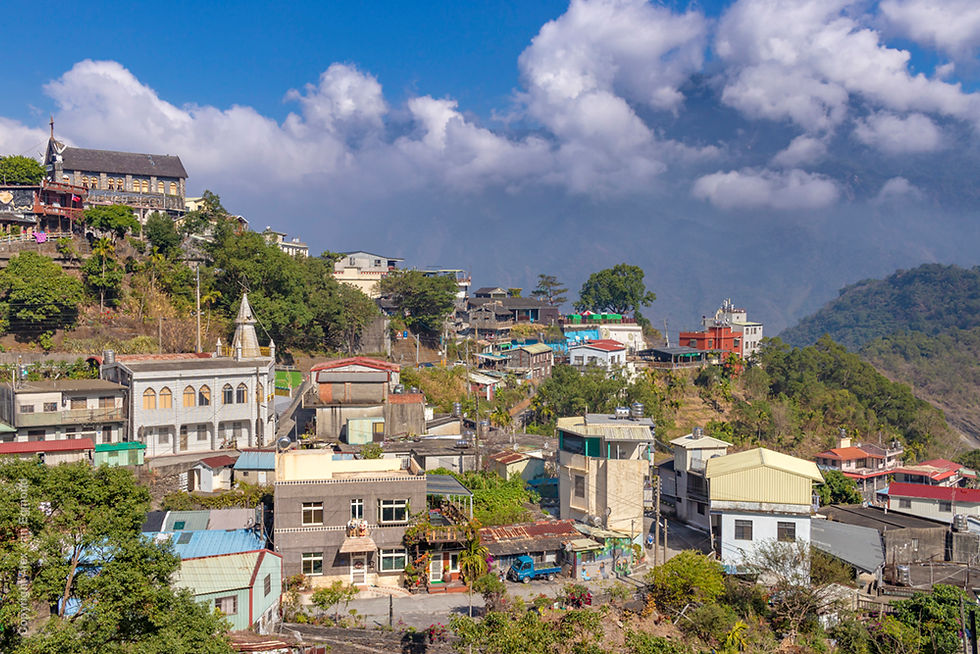
The indigenous population consists of two groups: the mountain dwellers and those living on the plains near the coast. The former managed to resist the influence of Taiwan's long succession of colonizers for the longest time, thanks in part to the rugged terrain of the island's interior.
Successive rulers who held sway over Taiwan—then known as Formosa—include the Spaniards (1626–1642), the Dutch (1624–1662), the Kingdom of Tungning (under Koxinga and his son, 1661–1683), the Qing Dynasty (1683–1895), and the Japanese (1895–1945).
Each imposed assimilation policies, using methods ranging from subtle to forceful. For instance, the Qing regime categorized the indigenous population into 'raw' and 'cooked' barbarians (shēng fān, 生番, and shú fān, 熟番) based on their degree of assimilation.
The 'cooked barbarians' were those who could assimilate into Han culture. The 'raw barbarians', on the other hand, were to be left largely undisturbed to avoid rebellion.
The Japanese adopted this classification system but pursued full assimilation into Japanese society, subjecting even the indigenous mountain dwellers to their policies.
By the end of the colonial period in 1945, nearly all indigenous people were literate in Japanese and had become some of the most loyal supporters of the Japanese Empire.
Ironically, the final colonizer, the Kuomintang (KMT) under the dictatorship of Chiang Kai-shek, banned Japanese influence and language.
The KMT promoted a centralized national identity, marginalizing the indigenous peoples and forcing many to abandon their traditional lifestyles.
Recognition
The KMT's policies led to a decline in the use of indigenous languages, stigmatization by the Han population, and shame among the indigenous groups. As a result, many indigenous people assimilated and concealed their identities.
Fortunately, much changed with Taiwan's democratization in the 1980s and 1990s. In recent years, indigenous groups and their cultures have become increasingly visible in the public sphere.
For example, several cultural parks have been established in Taiwan, allowing visitors to experience the music, dance, and lifestyle of indigenous groups. I personally visited the Taiwan Indigenous Peoples Culture Park in Majia.
Such a cultural park is great for getting an quick impression of the different groups, but it's even more enjoyable to visit the villages where the actual indigenous people live.
For example, the Rukai group from Wutai, who live high in the mountains, or the Amis group, who reside in the urban area of Hualien.
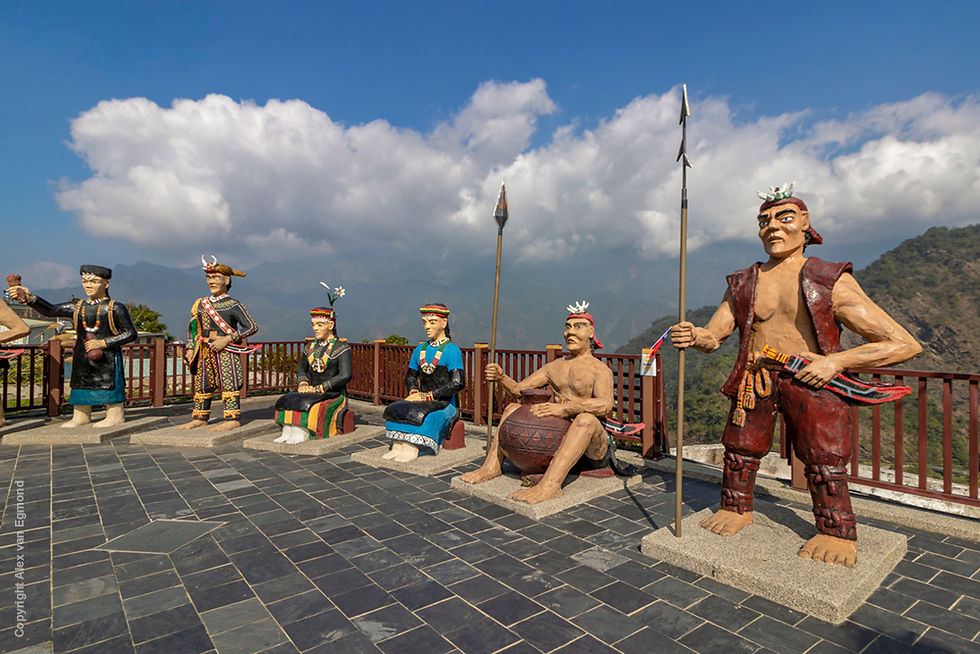
Don’t expect to find indigenous people in traditional clothing, as most have almost fully integrated into the dominant Han culture. However, you might get lucky sometimes.
Festivals are another way in which indigenous groups gain visibility. These events are widely advertised on buses, TV, and radio. For example, the Amis Harvest Festival, which takes place every year in July, attracts many tourists to the city of Taitung on the east coast.
However, the most significant influence of indigenous culture is heard in the music world. Since the 1980s, there has been a true revival of indigenous influences in Taiwanese pop music.
During the authoritarian rule of the Kuomintang (1947–1987), Chinese-language music was preferred. But with the lifting of martial law, space was created for other sounds.
Pop music, by nature, is a fusion of diverse influences and styles. Logically, indigenous voices have enriched the Taiwanese pop industry, as seen in musicians like pop diva A-Mei and the humble Sangpuy.
A-Mei, of Puyuma descent, debuted in 1996 with her album Sisters. She embraces her heritage and incorporates traditional elements into her music.

Right from the opening track of Sisters, A-Mei blends a traditional melody with Western dance music and Chinese-language lyrics.
Even more rooted in tradition are the emotional vocal arts of Sangpuy Katatepan Mavaliyw. He is from the Pinuyumayan group, and his music is a deep immersion into the soul of the culture.
However, while A-Mei sings in Chinese, Sangpuy exclusively sings in his indigenous language. A-Mei, after all, grew up during the authoritarian rule of the KMT.
Dilemmas
What unites A-Mei and Sangpuy is their quest to reconnect with the roots of their culture. This search now receives more support from the government and the majority of the Taiwanese population than ever before. However, we cannot overlook the social, economic, and political dilemmas that indigenous groups still face today.
In 2000, the unemployment rate among indigenous groups was still three times higher than the national average, but now, unemployment figures are gradually approaching the national average.
This progress is largely due to the efforts of the Council of Indigenous Peoples (CIP) within the government. The CIP provides professional placement services and support for indigenous job seekers in the labor market.
Despite this success, Han workers still earn, on average, twice the income of indigenous workers. Notably, 60% of the indigenous population still lives in poverty and faces lower life expectancy, alcohol addiction, limited access to education, and healthcare.

According to anthropologist Scott Simon, this is a direct consequence of colonization. In his contribution to Indigenous Peoples & Poverty, he identifies the collapse of social structures and the undermining of land rights as the primary causes.
Traditional means of subsistence, such as hunting, gathering, and agriculture, have almost completely disappeared, making indigenous groups more vulnerable to exploitation.
A notable example is the case of Asia Cement in Hsiulin, Hualien, on Taiwan's beautiful east coast. Asia Cement was established in the 1950s when Taiwan required raw materials like plastic, cement, glass, and other materials for industrial development.
In 1973, Asia Cement asked the indigenous Taroko group to lease their land in exchange for promises of employment and economic prosperity. The indigenous families received a small payment for relocating their crops.
Asia Cement promised to return the land after twenty years. However, the farmers were not well-informed by Asia Cement and the local government about the ecological consequences of cement production on both people and nature.
Over the following years, of the hundred families who leased their land, only thirty people were hired by Asia Cement. Above all, the indigenous families were denied their land when they wanted it back at the end of the lease period.
According to Asia Cement, the indigenous residents had permanently given up their land rights. Suddenly, the land became state-owned. To this day, multiple lawsuits are ongoing against Asia Cement, and unlike in the past, the corporation is sometimes forced to retreat.
In 2019, the residents succeeded in preventing Asia Cement from mining for another twenty years. Although the Ministry of Economic Affairs had initially granted permission, the Supreme Court overturned the decision based on the Indigenous Peoples Basic Law.
While this law was introduced in 2005, it was not actively enforced until President Tsai Ing-Wen took office in 2014. The law grants self-determination over ancestral land to indigenous groups, but an amendment in 2017 limited the rights to land that is publicly owned, leaving private land untouched.

Many indigenous people, including Amis singer Panai Kusui, saw this amendment as a broken promise by the president. Kusui protested against the legal change for seven years.
She did this in front of the Presidential Palace in central Taipei. Her years-long protest ended during the inauguration of the new president, Lai Ching-te.
In a 2017 interview for Taipei Times, she stated that the concept of land as private or state property cannot be reconciled with the way indigenous people traditionally used the land.
It is an extreme opinion that is not shared by all indigenous people. In modern times, a return to how things were four hundred years ago is impossible.

Kolas Yotaka, also an Amis and a member of parliament from 2020 to 2023, puts the bold claims into perspective in an interview with Reuters. She says that 90% of traditional land is state-owned, and that indigenous groups should have a say in how that land is developed.
Creating employment and improving economic status are the priorities, according to Kolas. As the first indigenous politician, compromising has become second nature to her. However, as mentioned, not all indigenous people are open to mediation.
Too much land, culture, and language has already been lost.
※※※



Comments