
Cycling through the Cultural Revolution: former Dutch teacher in China, Johan Jutten

Updated: Feb 2, 2025
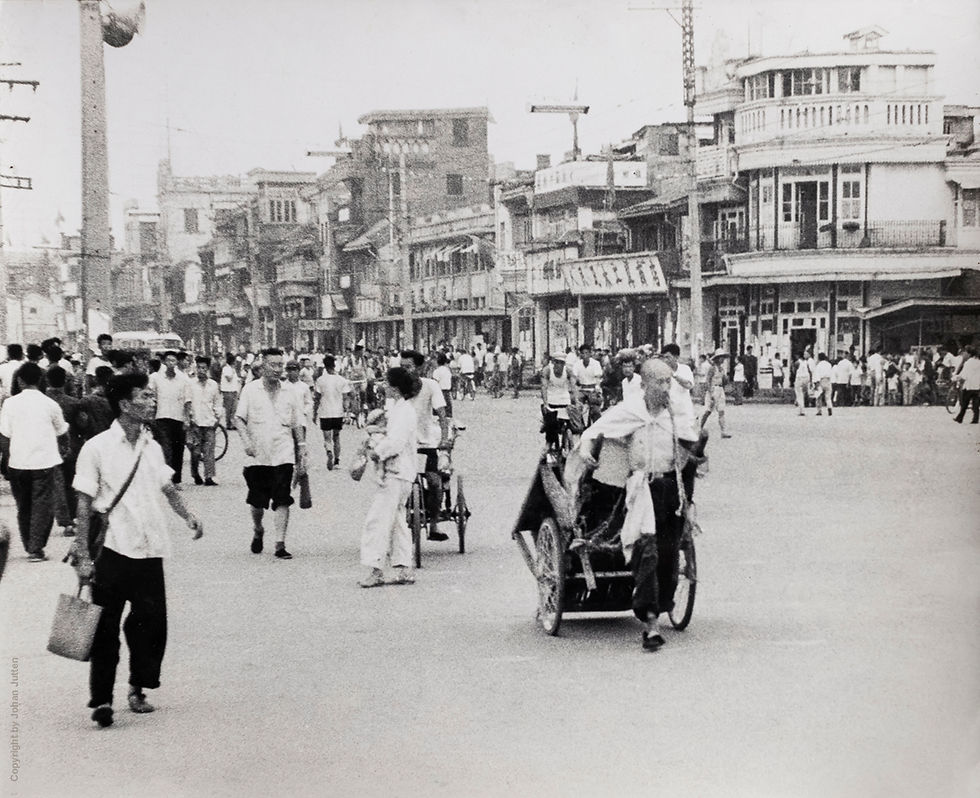
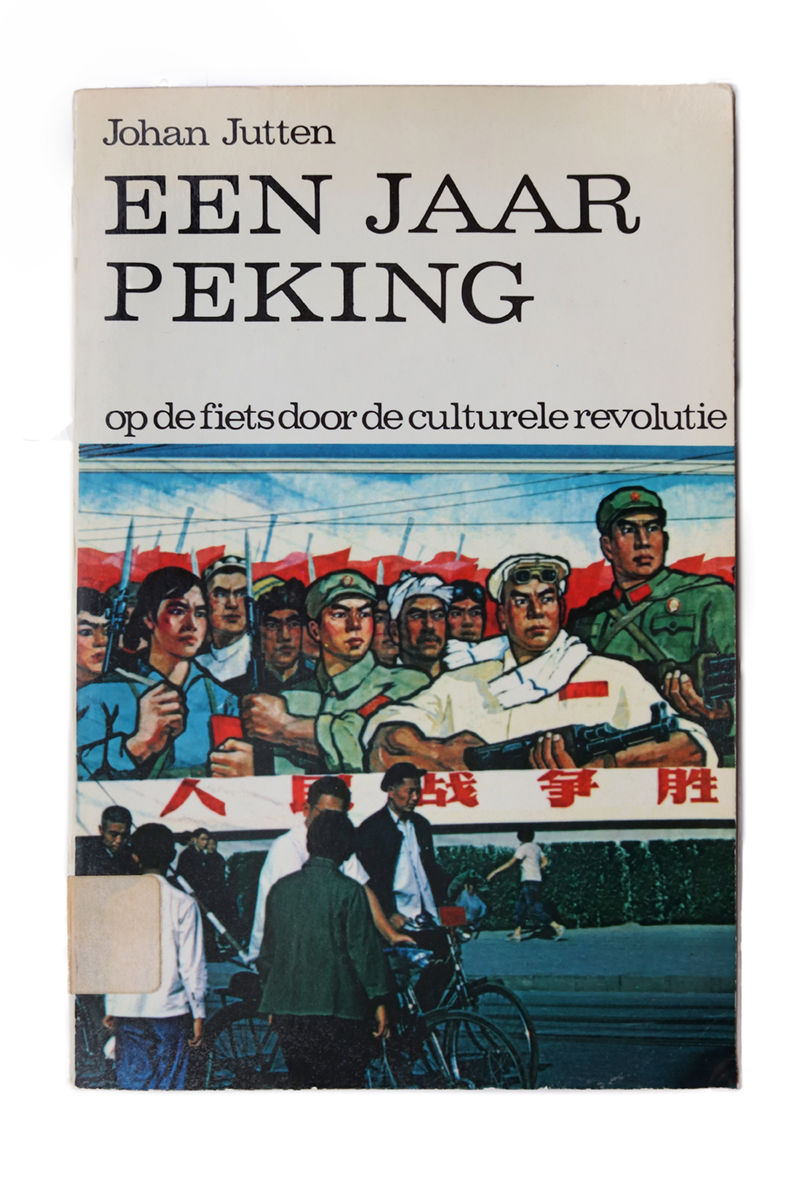
In 1969, an extraordinary little book was published by Kosmos Publishers with the Dutch title: Een jaar Peking. Op de fiets door de Culturele Revolutie (A Year in Beijing. Cycling Through the Cultural Revolution).
The author, Johan Jutten, worked as a Dutch language teacher at a Chinese institute between 1965 and 1966 and witnessed the beginning of the Cultural Revolution. A few years ago, I read through this book with great interest, as I, like Jutten, also worked as a Dutch teacher in Beijing.
The period was, of course, incomparable, yet I could still recognize parallels between past and present. Jutten was forced to leave China in 1966, leaving his students behind in the chaos.
Recently, I heard that he had taken the bold step of returning to China more than fifty years later to visit his former workplace. You can read about how that turned out in this interview.
Text: Alex van Egmond
The book that Jutten wrote about his experiences in China is now a rare possession, barely available even in antiquarian bookstores. Anyone who does manage to obtain it will want to read it cover to cover in no time.
In Een jaar Peking, Jutten recounts in great detail how he was hired and the hurdles he had to overcome to travel to China. He describes the fascinating world of Beijing in the 1960s and, of course, the impact of the Cultural Revolution on his work at the university.
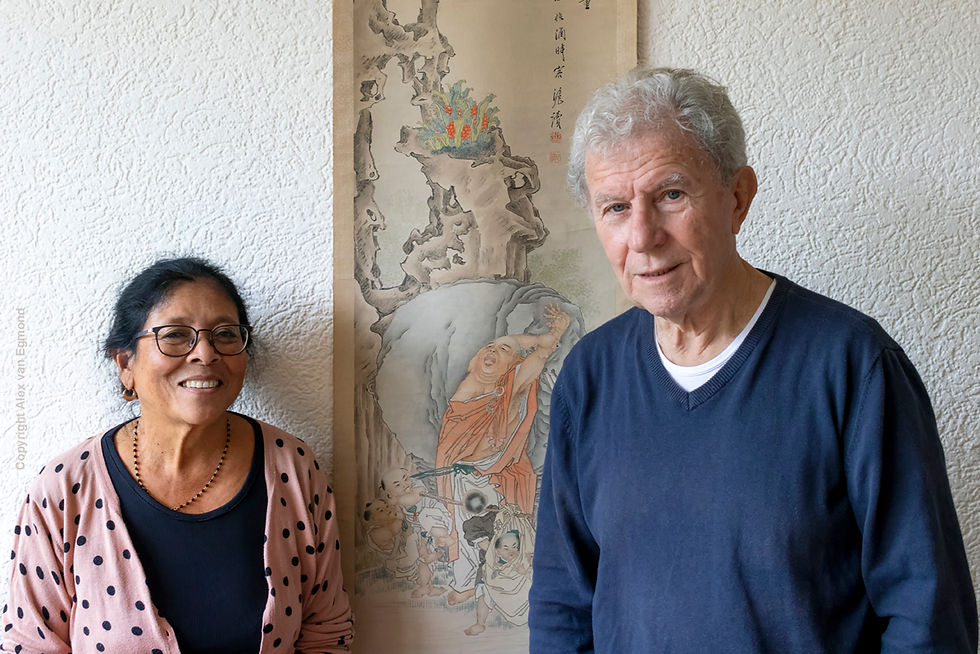
I meet Jutten and his partner Lourdes at their home in Dordrecht, under Rotterdam in the Netherlands. Jutten:
"I was a teacher in Groningen for a long time, but a teacher with a love for traveling. My partner and I went on many trips.".
In 1964, as a young man in his twenties with a teaching diploma in hand, he read in De Vacature about a position as a Foreign Language teacher in China. It seemed like a wonderful adventure to him.
"Because of bureaucracy, I was only able to leave in 1965. Mind you, the bureaucracy in the Netherlands! As a Dutch citizen, I could lose my nationality if I entered foreign state service without royal permission. In addition, the Domestic Security Service strongly advised me against staying in China".
His petition to former Queen Juliana remained under review for months. In the meantime, Jutten sought advice from people who had previously been to China, such as the writer Jef Last and the businessman and politician Sydney van den Bergh.
They all agreed, both with him and with each other, that he should simply go—and so he did, in October 1965. Jutten and his then-wife Ria took the train to Moscow without royal permission, from where they transferred to a Chinese train bound for Beijing.
Upon arrival, they were met by representatives of the Beijing Broadcasting Institute, Jutten’s new employer. This institute still exists today, though it is now called the Communications University of China (CUC).
The couple was housed in the Friendship Hotel, on the other side of the city—a complex built during the period when China and the Soviet Union still had good relations.
I tell Jutten that I used to visit the hotel every year when a party was organized for 'foreign experts.' Jutten explains that, in the 1960s, the building served as housing for all foreign experts working in state service—around a thousand people.
"It was modestly furnished, but it had everything: a swimming pool, shops, restaurants, and even a football field. Together with other foreigners, we formed an international team. An Englishman was the coach. I always had to translate what he said for the Italians. I did it in French because I didn’t speak Italian".
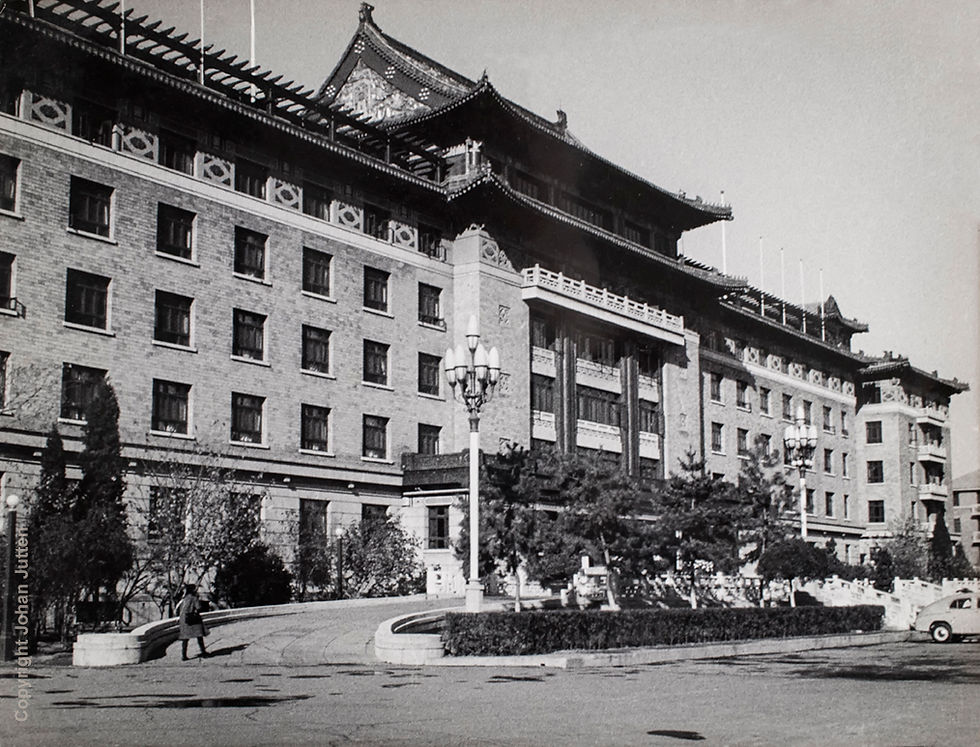
It was a diverse group at the Friendship Hotel, with some foreigners in China for idealistic reasons. However, the football team was disbanded after an incident, Jutten recalls:
"At one point, there was trouble because an African player wasn’t selected by the English coach. Well, that player didn’t agree with the decision, and at the next training session, he showed up with a large knife. He wanted to attack the English coach, but fortunately, we were able to prevent it. Later, it turned out that this African man was a rebel leader from Angola!"
According to Jutten, it was common for such dubious individuals to come to China after being forced to flee their home countries due to rebellious activities.
Revolution
Jutten officially came to China to work as an English teacher but was soon asked to teach Dutch. At the Broadcasting Institute, a new group had just started—about twenty boys and girls from all over the country.
The young Chinese man Chang Saoyou became his interpreter and contact person. On November 22, 1965, Jutten was taken by taxi from the Friendship Hotel to the institute for his first lesson.
He quickly discovered that the university’s teaching methods were outdated.
"They used the natural method, where grammar and sentence structure were considered secondary. Fortunately, I had freedom in my teaching approach, but when it came to teaching materials, I didn’t".
In his book, he provides an example of a text supplied by the institute:
'Koerbaan Toeloemoe is a member of a people's commune in the autonomous region of Xinjiang Uyghur. He is now eighty-two years old. When he was still a boy, he had to work hard for the landlord. [...] In 1952, the land redistribution took place, and Koerbaan Toeloemoe received fourteen hectares of land and a few rooms. Under the leadership of the Party and Chairman Mao, his life improved day by day. He longed to see Chairman Mao with his own eyes' (translated). ‘Koerbaan Toeloemoe is een lid van een volkscommune in het autonome gebied SinkiangWeewoear. Hij is thans tweeëntachtig jaar. Toen hij nog maar een jongen was, moest hij hard werken voor de grootgrondbezitter. […] In 1952 vond de herverdeling van het land plaats en Koerbaan Toeloemoe kreeg veertien hectare grond en een paar kamers. Onder leiding van de Partij en voorzitter Mao werd zijn leven elke dag beter. Hij verlangde ernaar voorzitter Mao met zijn eigen ogen te zien’ (original).
Fifty years later, Chinese education still consists of much ineffective rote learning. Other parallels come up when Jutten pulls out a yellowed photo album so packed that it almost bursts from its spiral binding.
"I'm good at keeping things," Jutten says, laughing. A photo of the 'University Sports Day' draws my attention.
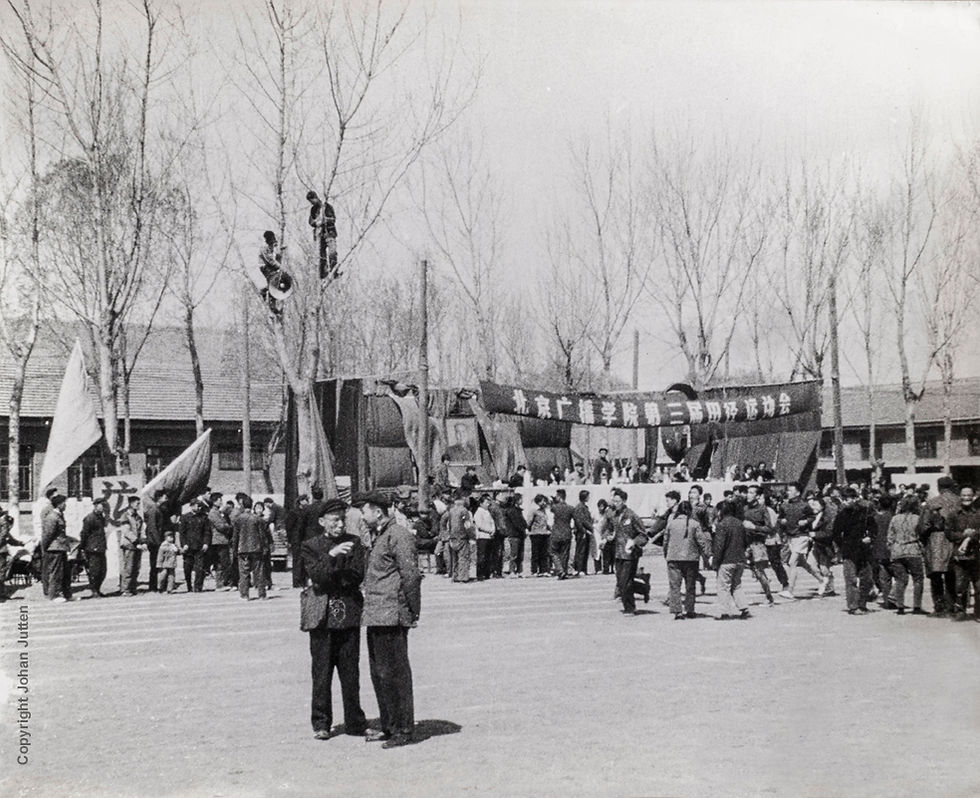
In China, this is an annual event, where foreign experts must solemnly attend, and after the ceremony, they can watch their students excel in running and jump rope.
This also happened during Jutten's time, but back then, different 'sports' were on the program.
"Grenade throwing was a serious activity for the students. The girls also participated. I had a girl in my class, Ma Youying, who was extremely enthusiastic about throwing. All, of course, for the socialist revolution", says Jutten.
Indeed, this reflects the spirit of the time. In his book, Jutten provides plenty of examples, from learning Dutch to making shoes for the revolution.
At the end of May, a real revolution breaks out that will turn China upside down for years to come.
At the institute, Jutten no longer has to teach for the time being, as the students are expected to study the Cultural Revolution.
From then on, Jutten spends his time cycling around the city and taking photos. The consequences of the political developments quickly become clear to him through the presence of Red Guards on the streets and the many wall newspapers that cover the walls of Beijing.
He witnesses the chaos: potential revisionists are booed, mocked, and taken away. Items labeled as 'bourgeois' are removed from churches, temples, homes, and shops.
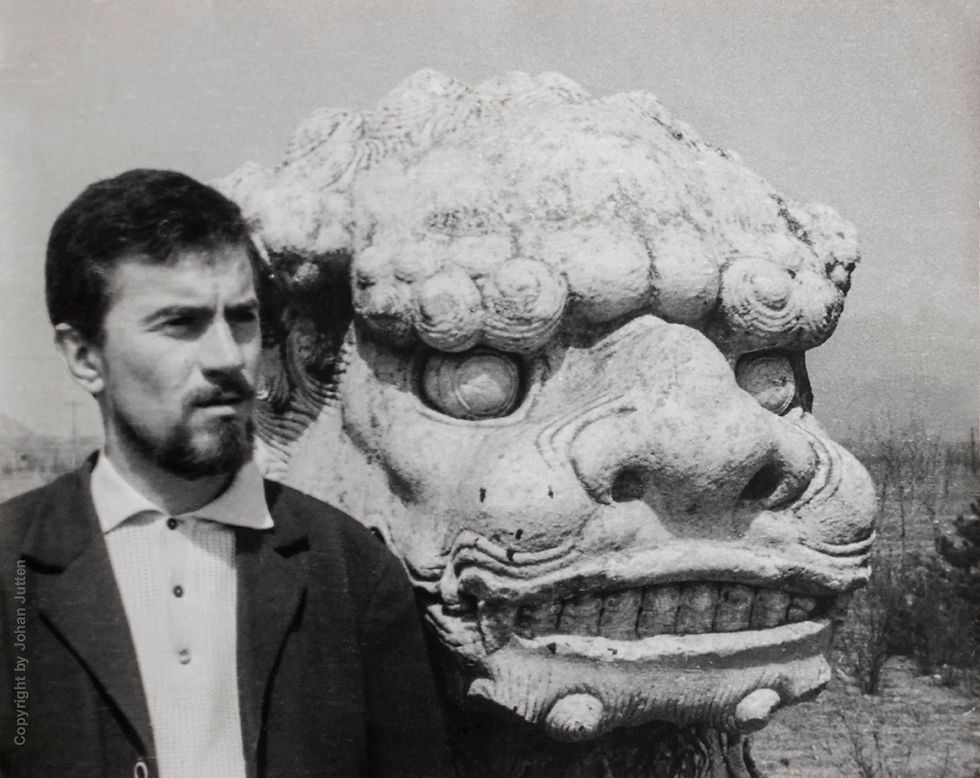
The effects are also noticeable at the Radio Institute. The teaching materials, which were already not great, are reduced to nothing but translations of Chairman Mao’s works, and the Chinese teachers are forced to do farm labor on communes outside of Beijing.
There is no more work to do for Jutten. On October 6, 1966, he and his wife take the train back to the Netherlands. At the station, Assistant Chang Saoyou, among others, waves the couple off until the train disappears from sight.
To return
What motivates Jutten to take a group trip to China more than fifty years later? Jutten answers matter-of-factly:
"My partner Lourdes has a Chinese father. She wanted to see what it's like there".
Despite that simple reason, Jutten managed to kill two birds with one stone and visited his old workplace. The visit to the university takes place on the first day that Jutten and his partner are in China.
A meeting with the dean has been arranged. with the help of a contact person in the Netherlands, the couple knows. Everything has been taken care of, so they only need to be in the hotel lobby at the agreed-upon time.
"It was perfect. At nine o'clock, a young man with a cheeky face stood in front of us. He spoke great Dutch and introduced himself as Klaas-Jan, after a famous soccer player from a famous Amsterdam club", says Jutten enthusiastically. "I never expected something like that".
Klaas-Jan had studied Dutch at the CUC but had also spent a year in Groningen, up in the North of The Netherlands, as part of an exchange program. He would play the role of guide and interpreter for the day. They drive slowly through the busy traffic and the jungle of high-rise buildings.
"I couldn’t recognize anything along the way, but suddenly the car made a turn, and we drove through a familiar gate. That turn I knew like the back of my hand. Fifty years ago, I made that turn every day on my way to the institute".
Klaas-Jan stops the car in front of a two-story building with red window frames and doors.
To Jutten’s surprise, it is the same building where he taught his twenty students in 1965-1966, but the biggest surprise is yet to come.
"We went inside, and I noticed that the color of the walls was still the same, off-white. In a small room, there was a wooden table with teacups and a plate of mandarins and cookies.
Then, suddenly, I saw my old assistant, Chang, sitting there! Still with his sagging glasses, as if no half-century had passed. But two former students had also come, Kong Lingxiu and Liu Teping. I never could have imagined this in my wildest dreams!"
After recovering from the surprise, memories are shared, and various interesting details are exchanged in the presence of two deans. Klaas-Jan translates between the two parties.
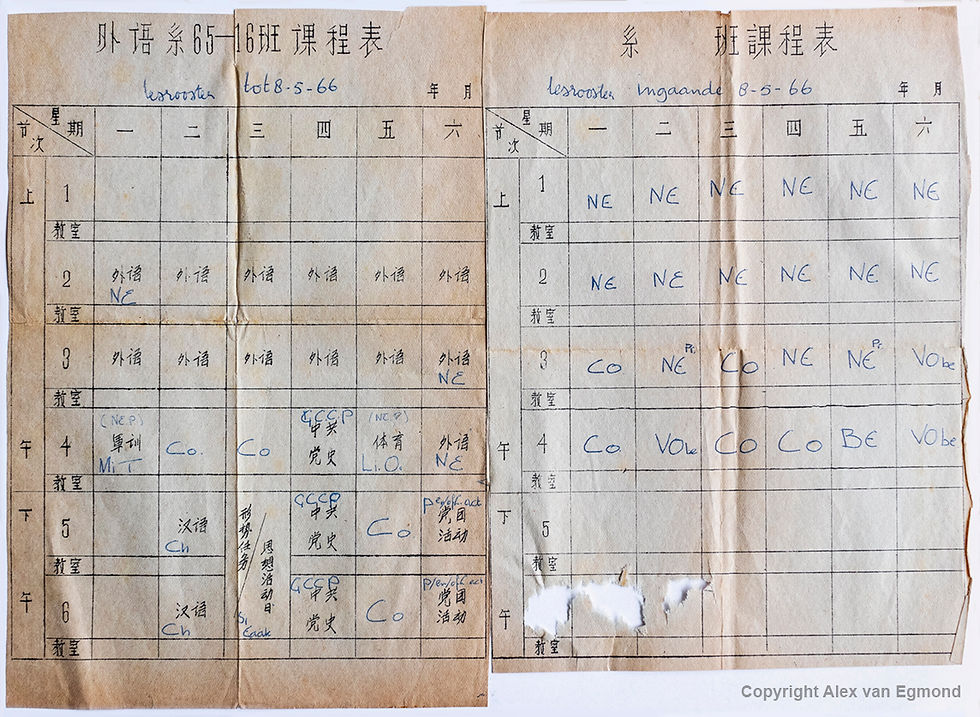
Jutten says that he had brought an old class schedule with him, which brought back even more cherished memories. He continues:
"Even more moving was the photo of a piece of paper with my signature on it. My former student Kong Lingxiu showed it to me on her phone. Can you imagine, she had kept that scrap of paper all these years, just because I had signed it".
Of course, Jutten was curious about how the students had fared during the turbulent years of the Cultural Revolution, but every question in that direction remained unanswered.
"There were often painful silences when Johan asked questions, deemed political in China", says his partner Lourdes.
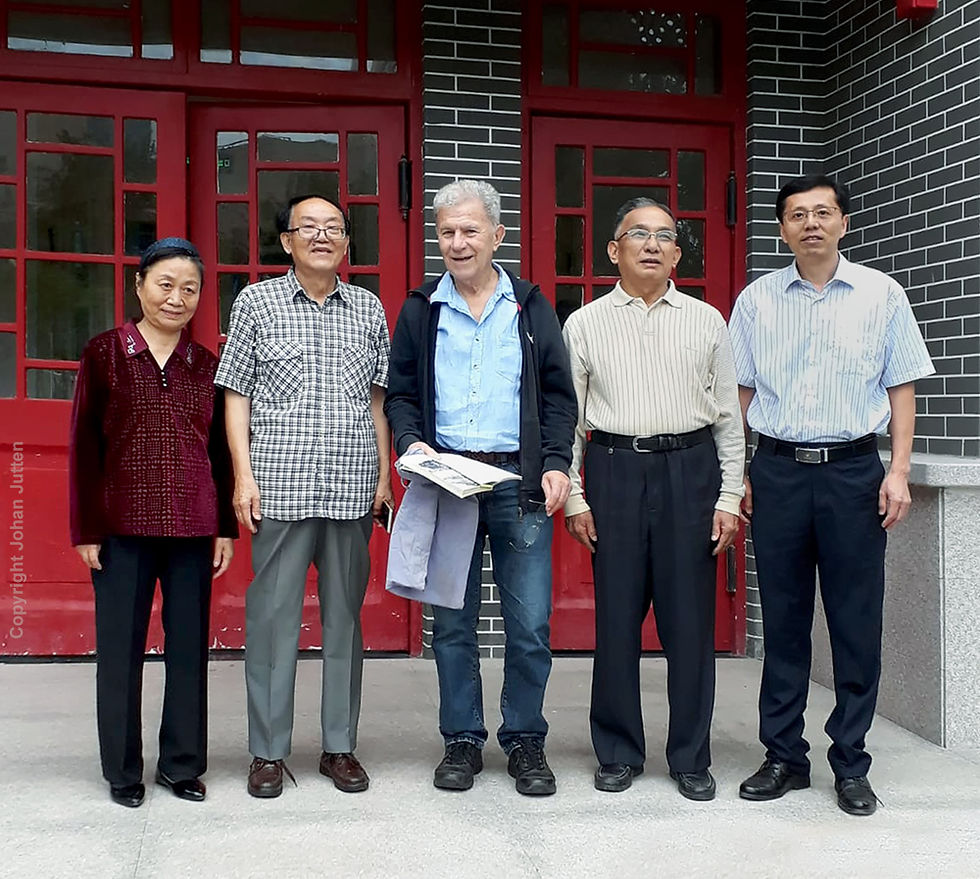
Jutten agrees: "The meeting was somewhat formal, but still overwhelming in terms of warmth. When we were outside again, Chang, Kong, and Liu had quickly disappeared. I would have liked to chat some more in a relaxing setting".
The reunion is over in a flash, and the couple continues their journey through China.
"That meeting at the Broadcasting Institute was definitely the highlight of the trip", Jutten says. "All those temples we visited day after day, we eventually had seen enough. But, well, that’s the downside of travelling in a group".
Finally, I ask Jutten if he became a communist after his last stay in China, a playful reference to the beginning of his book. There, he recounts how, in his first conversation at the Chinese legation in The Hague, he said that he absolutely did not want to become a communist, nor speak or think in that way.
Jutten laughs: "No, that didn’t happen, and it never will. I don’t follow any leader".
※※※


Comments