
Book Fever in Traditional China: The Tianyige Library


Book lovers have existed for centuries, and private collections can be found all over the world. The Chinese were among the first, thanks to the invention of paper and block printing.
As early as the Warring States period (475–221 BC), the first private collections began to emerge. Books conferred social and moral prestige upon their collectors, and their accumulated libraries were meant to be preserved for future generations.
The example of the most famous private library from the Ming and Qing dynasties (1368–1644 and 1644–1911) shows that Chinese bibliophiles had much in common with their Western counterparts, though they also differed in several key ways.
Text: Alex van Egmond
The Book Fever
Dutch writer and poet Gerrit Komrij (1944–2012), himself an avid book collector during his lifetime, once sighed the following:
'The bibliophile is a despicable creature; he is seriously ill. I know it. But what can you do? […] When I see a book, I’m lost. There is no selectivity, no refinement to speak of. The higher the pile, the better'.
That pile is a pile of forgetfulness, as the bibliophile loses all interest in the acquired book and immediately begins the search for the next one. Chinese bibliophiles, both past and present, shared a similar compulsive urge to collect.
However, the modern concept of a book — bound sheets of paper with a cover — did not yet exist in ancient China. People wrote on various natural materials, such as stone, tree bark, animal hides, leaves, and bones.
Naturally, these materials had limitations in terms of distribution and preservation. During the Warring States period, the transmission of knowledge gained importance, prompting a search for better alternatives. This led to the use of silk and bamboo slips.
These methods had several advantages over other natural materials. Bamboo slips were written on vertically, from top to bottom, and could be tied together with string, making them easy to roll up and transport.
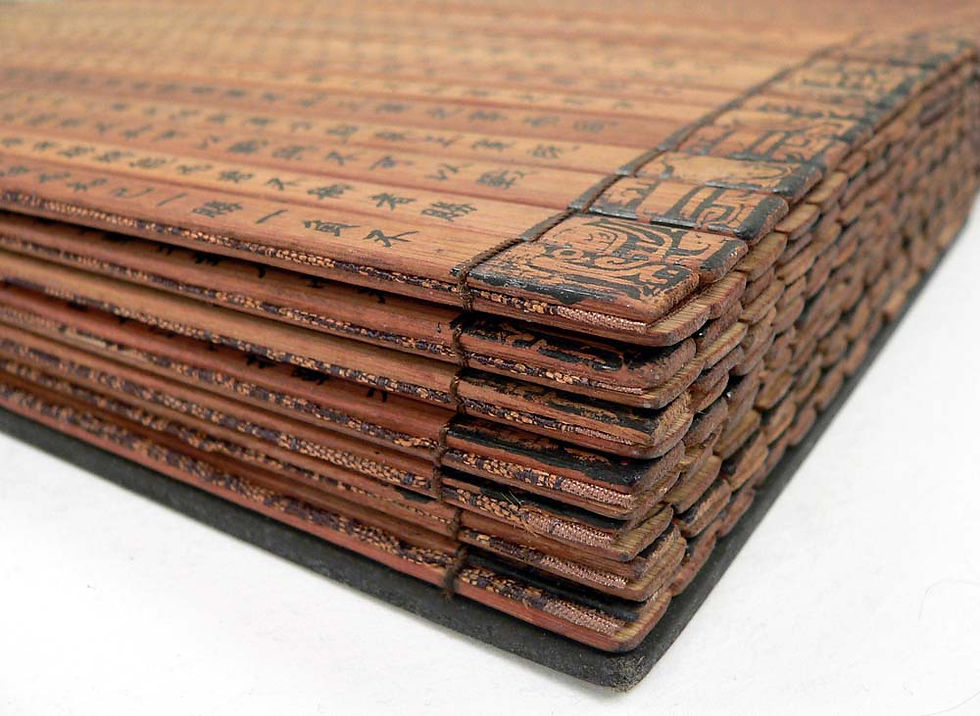
An additional advantage was that bamboo slips could be reused by scraping off the top layer with a knife. Even lighter and more durable were books made of silk, but because silk was extremely expensive, neither bamboo nor silk proved to be true innovations—at least not until the advent of paper.
In 105 BC, court official Cai Lun reported the invention of paper to the emperor. However, the discovery of paper fragments in Dunhuang, in northwestern China, suggests that papermaking may have been known nearly two centuries earlier.
Paper accelerated the development of Chinese civilization more rapidly than ever before.
However, the 'book' still took the form of a scroll, known as a juan. It was only with the replacement of block printing by movable type during the Song dynasty (960–1279) — using individual characters that could be assembled and reused — that the scroll was definitively replaced by separate pages, giving rise to the book format we still recognize today.
It is no surprise that during this period, the number of private collectors rose dramatically. The movable type technique made it easier to reproduce texts, enabling large print runs.
Prestige
The first private collectors can be considered the Chinese philosophers Confucius and Laozi. They lived during the Warring States period, when, as mentioned earlier, the transmission of knowledge became increasingly important. As society developed, there was a growing need to record and preserve knowledge.
Books became the medium through which the Four Categories — classics, history, philosophy, and compilations — were documented. Chinese officials in later dynasties, the so-called literati, collected books for several reasons.
First, a literatus needed books to prepare his sons for the imperial civil service examination. This examination, introduced during the Han dynasty (206 BC–220 AD), offered candidates a chance at a government position and thus the promise of a secure career.
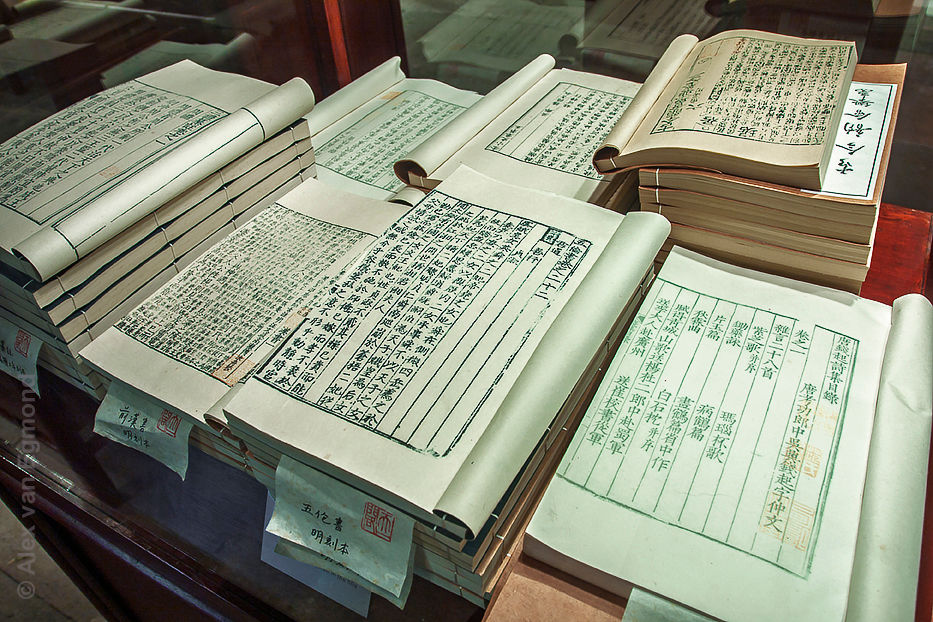
That is, if one managed to pass—only 1 to 2 percent of all candidates succeeded.
For the official examination, candidates were required to memorize, among other things, the Four Books and Five Classics, which had been passed down by Confucius and his disciples.
This amounted to about four hundred thousand characters that candidates were required to recite during the examination.
Secondly, through reading and studying, one could gain social and moral prestige. A literate person stood apart from the illiterate masses, and for that reason, he was considered successful and intelligent.
In ancient China, it was also believed that reading books about morality would naturally lead to better order and stability. The reader armed himself with a better understanding of morality and would act accordingly, so the general idea went.
The Brothers Ma from Yangzhou
During the Qing dynasty in Yangzhou (Zhejiang province), the brothers Ma Yueguan and Ma Yuelu established a library. They did not come from an elite family but had received a solid education in the Chinese classics.
This shows that, especially during the Ming and Qing dynasties, a new elite could emerge, one that gained its position through wealth rather than heritage.
Because of their surname, they were known in Yangzhou as the 'Two Ma's'. At its peak, their library contained over one hundred thousand volumes.
Lastly, the book served as social capital. A book collection was passed down from father to son within a family, ensuring its continuity. Hard-to-obtain books from previous dynasties were carefully cherished by their owners.
This sometimes meant hiding special editions from outsiders. Often, a collector family would keep two catalogs: a censored list with insignificant books and a complete list, which was carefully kept behind closed doors.
The extent to which the bibliophile had to be cautious is evident from the story of the Tianyige Library.
The Library
Many Chinese private collections were destroyed in the chaos of wars, revolutions, and social changes, but the Tianyige Library preserved the majority of its collection and original buildings.
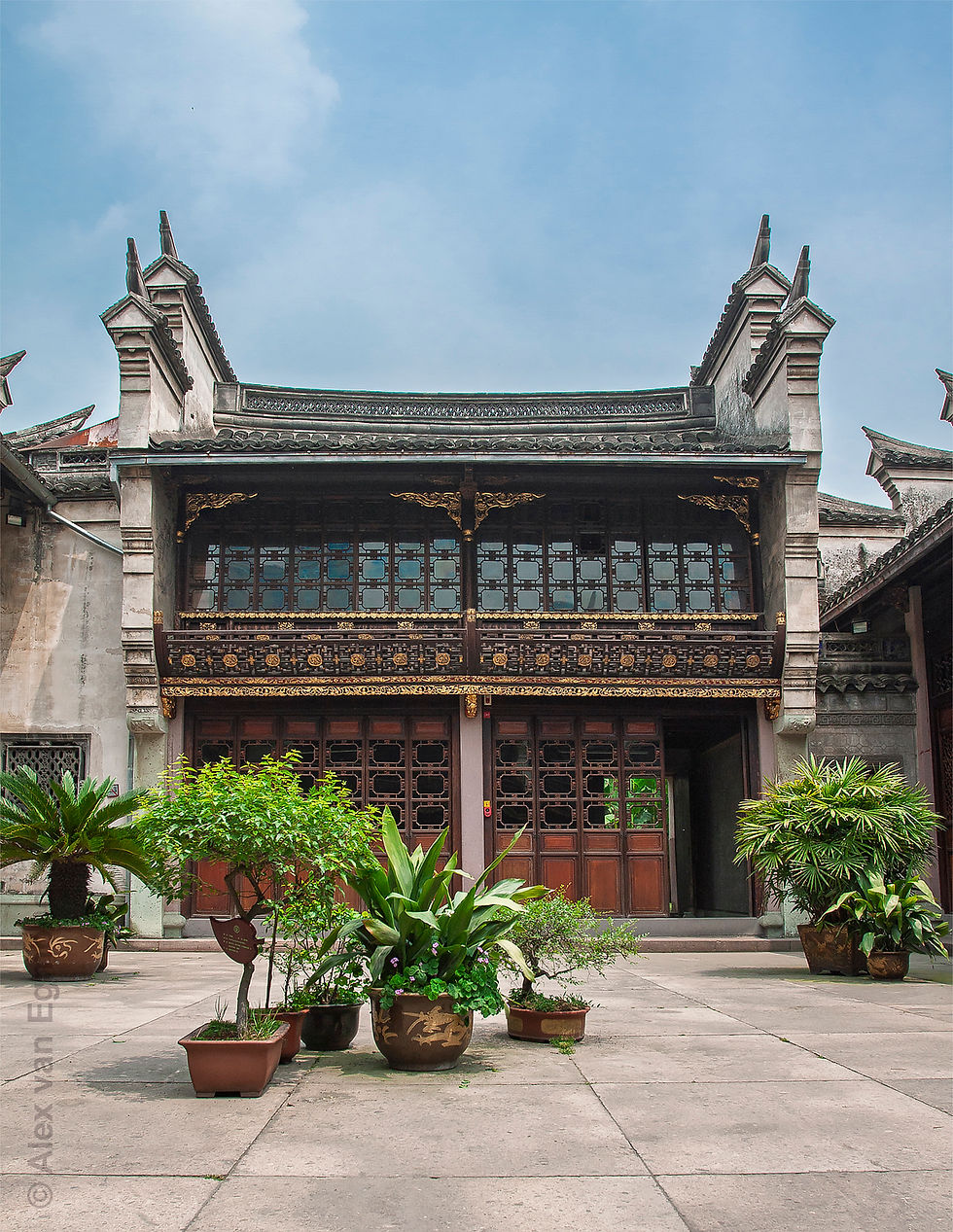
In the eastern Zhejiang province, near Hangzhou, lies the city of Ningbo, where the library can be visited. A visit is certainly worth it, if only to enjoy the beautiful botanical gardens surrounding the buildings. As soon as you step through the gate from the street, you find yourself in a green oasis of tranquility.
The fact that the library still exists is thanks to the efforts of its founder, the imperial official Fan Qin (1522–1566). He served as the Minister of Defense during the Ming dynasty, and since his work took him to various regions, he was able to amass an impressive collection.
A collection that, upon his death, included five thousand titles and twenty thousand copies. Between 1561 and 1566, he built a structure around his amassed books to protect them from disasters.
Apart from war, fire is the greatest threat to book collectors. In the past, many private collections were destroyed by flames. Therefore, Fan Qin took several measures to safeguard his collection. He had a large pond constructed in front of the library, which was connected to a lake in the city.
The building was also made of brick, which, for that time, was a costly investment. Finally, a wide firebreak with a high wall separated the library from other buildings, in order to prevent a spreading fire.
In addition, books do not thrive in damp conditions or drastic atmospheric changes. Fan Qin took this into account when designing his library building. Large windows were positioned to open to the north and south, and the books were stored in cabinets open from both the front and back, optimizing air circulation.
A special herb kept the moths away, and under the cabinets were stones with moisture-regulating properties.
However, humans should not be underestimated as an enemy of a carefully acquired book collection. Book collectors have a legitimate aversion to lending their books, simply because their books are often not returned by the borrower.

An old Chinese saying speaks volumes: 'Lending a book is foolish; returning it is just as bad!' Many Chinese book collectors also included warnings in their books, such as: 'Whoever borrows this book and does not return it will be executed by the gods.'
Xu Shidong from Ningbo
Xu Shidong had loved reading since childhood and lived in the same city as Fan Qin. He read the thousand books his family owned but still felt unsatisfied, so he began collecting and reading more books.
At one point, he owned sixty thousand volumes, which he kept in two libraries in the city. One library was looted during the Taiping Rebellion (1850–1864), and the other was completely destroyed by fire in 1863.
The following year, Xu rebuilt one of the libraries and, after years of intensive collecting, was able to rebuild a respectable collection.
By the way, even the descendants of the librarian had to know where they stood, should they ever think of letting the inheritance decline.
Collector Wang Chang (1725–1806), for example, left a warning that if an untalented heir dared to sell his books or lose them in any way, he would be no man but a pig and a dog. The unfortunate heir would then have to be beaten and removed from the family tree.
Rules
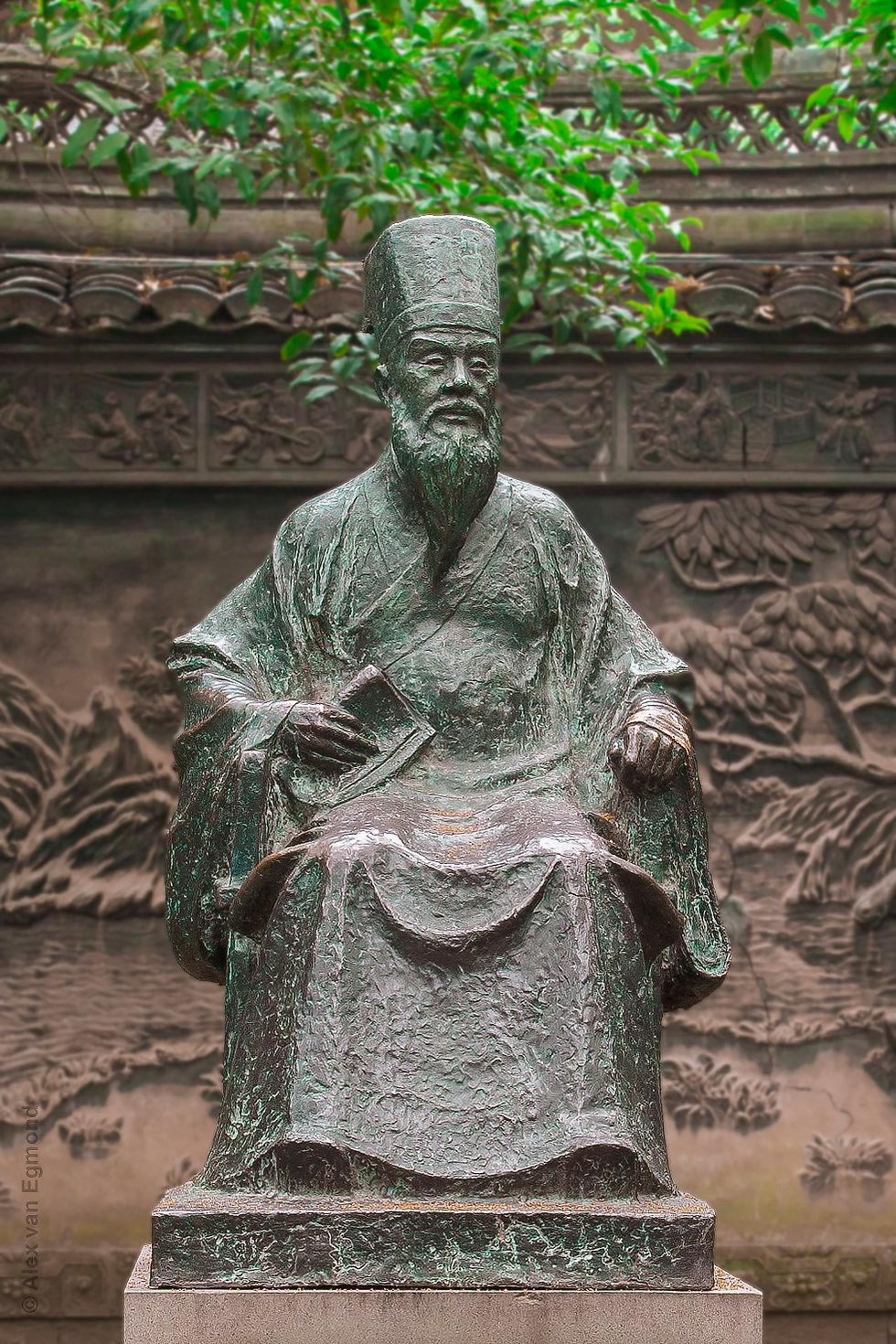
Fan Qin also left rules for his heirs that determined the preservation of the library. The Fan family was tasked with maintaining the library, and only direct family members were allowed to enter. If an outsider was admitted, it was punished by a one-year ban from the ancestor worship ceremony.
Another rule prohibited smoking and drinking alcohol in the library. Yet another rule stated that all six heirs had to be present when the library was closed at night (no one was allowed to enter the library after dark).
Fan Qin's drastic rules ensured the survival of the four-hundred-year-old library. Nevertheless, the Tianyige Library also faced great challenges at the beginning of the last century.
The Jiangs from Haining
Three generations of collecting by the Jiang family in Haining (Zhejiang Province) resulted in a collection of over one hundred thousand volumes.
Jiang Kaiji began collecting during the Qing dynasty, but it was especially his grandson Jiang Guangyu who did everything in his power to acquire the most valuable manuscripts and rare editions.
After the founding of the People's Republic of China, the collection was housed in the public libraries of Beijing, Shanghai, and Zhejiang. The old library building in Haining is still open for visits today.
The establishment of public libraries in Zhejiang placed additional pressure on Fan Qin's descendants to open the library to the public. Ultimately, it was a powerful typhoon in 1933 that caused the family members to yield to the pressure.
The Fan family had to turn to the local government, as there was no money to restore the damaged library.
A special committee was established for the management of the library.
At that time, the book collection amounted to a modest thirteen thousand titles. It would only begin to grow again after 1949 when the library was donated to the People's Republic of China.
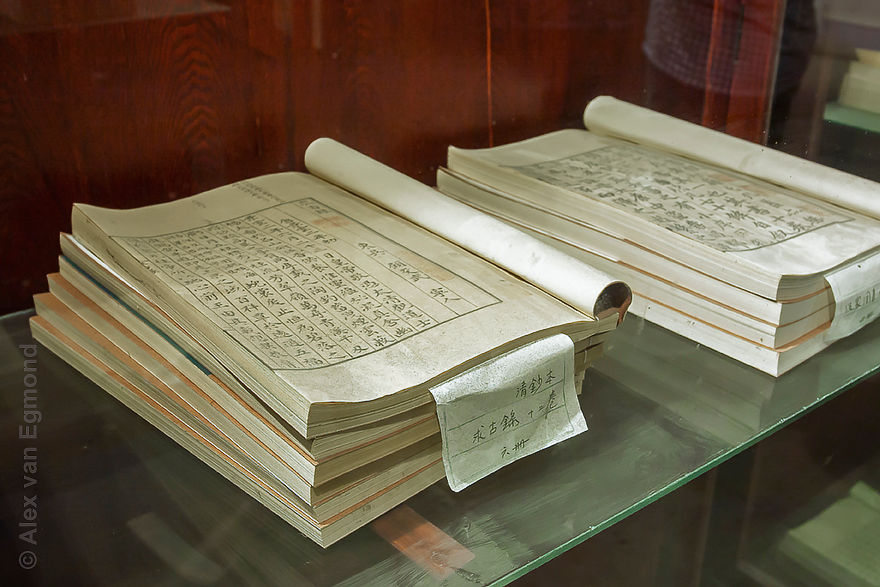
It is ironic to see that the collection of books in ancient times, among the literati, began with the idea of knowledge dissemination, but later private collectors went to great lengths to keep their books hidden from others.
In this regard, they had something in common with their Western counterparts. Today, the Tianyige Library houses three hundred thousand titles and has become an important research center for ancient books.
Anyone can now lay their hands on the rare books that Fan Qin once cherished and wanted to protect so strictly. However, one rule still endures: the entrance door is locked at night.
※※※



Comments