
'A small act of kindness can have a great impact': Cheng Yen and Humanistic Buddhism

Updated: Jan 21, 2025

The Buddhist Tzu Chi Charity Foundation (cí jì jījīn huì, 慈濟基金會) may not be widely known, but it is a significant international aid organization that mobilizes a large number of volunteers in times of disaster.
Among other efforts, it provided emergency relief after the Nepal earthquake (2015), Hurricane Harvey in the United States (2017), and more recently, assisted flood survivors in Brazil.
The founder is the Taiwanese Buddhist Shih Cheng Yen, a woman who has dedicated her entire life to helping others. This article offers an introduction to Humanistic Buddhism and the work of Cheng Yen and her Tzu Chi Charity Foundation.
Text: Alex van Egmond
Dilemma
In his groundbreaking work Tao, the Living Religion, Kristofer Schipper describes Buddhism as a universal faith that, although distanced from society, often aligned closely with the government and placed a significant burden on the economy.

This was certainly the case in ancient China. Critics during the late Tang dynasty (618–907) argued that Buddhists should be more involved with the Chinese family rather than isolating themselves on their path to enlightenment.
Additionally, they received generous donations from followers (often the elite), amassing wealth that was primarily spent on magnificent sanctuaries, pagodas, and statues. This was one of the reasons why Emperor Wuzong of the Tang dynasty persecuted Buddhists during his reign.
The persecution peaked in 845 AD when more than 4,000 temples were destroyed, and the majority of monks and nuns were expelled.
Buddhism survived this persecution, although it would never regain the level of popularity it enjoyed during the Sui and Tang dynasties.
When such a dramatic event occurs in history, it is often followed by a period of introspection that allows for reform, but for Buddhism, this would take several centuries.
In the nineteenth century, China faced European dominance in military and economic arenas, and Chinese intellectuals were confronted with a critical choice: to resist, fully embrace, or selectively adopt certain Western influences.
Buddhism also faced this dilemma and found the reformer it needed in the monk Taixu.
New Buddhism
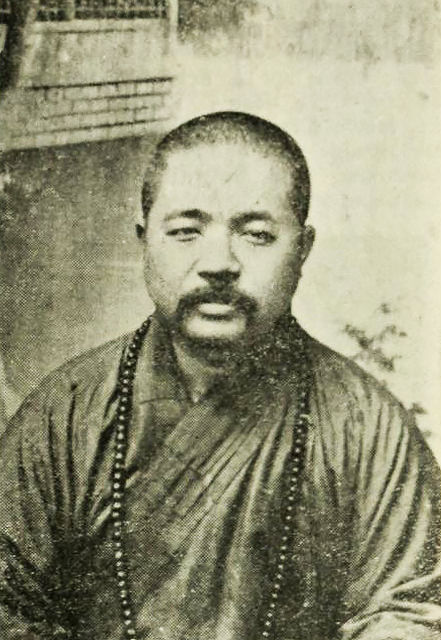
Taixu (1890–1947) was born as Lu Peilin in Zhejiang Province. At the age of fourteen, he joined the Xiao Jinhua Temple in Suzhou and renounced his lay status.
A few years later, he became interested in the work of revolutionaries like Kang Youwei and Liang Qichao, who advocated reforms during the late Qing period and called for a constitutional monarchy.
As a young adult, Taixu became an avid reader, which soon led him to the Three Principles of the People. The political philosophy of Sun Yat-sen, also referred to as the father of modern China in both China and Taiwan. Parallel to Sun Yat-sen's vision of creating a modern nation, Taixu envisioned the creation of a 'New Buddhism' in China.
Taixu advocated for a fusion of Buddhism and socialism, a compromise between Western humanism and science, and authentic Buddhist values.
He called this concept rénshēng fójiào (人生佛教), or 'Buddhism for the living'. To emphasize the universal nature of his vision, he changed the term in 1933 to rénjiān fójiào (人間佛教), meaning 'Humanistic Buddhism'. In his writings, Taixu stated:
'[...] Everyone has the responsibility to improve society using Buddhist principles and to ensure that humanity progresses. It is Buddhism that improves the world'.
Within the Buddhist community, there is a distinction between the lay order and the monastic order.
A layperson is akin to a part-timer who can perform services for the temple but otherwise leads an independent life in society, whereas monks and nuns devote themselves entirely to Buddha and have no other duties.
With his appeal to Buddhism as a universal doctrine, Taixu expanded the importance of the lay order. He wrote:
'The Buddhist doctrine is not divorced from the common man or from independent science. [...] It is not necessary to leave lay life to learn from Buddha'.
When Taixu died in 1947, his efforts to reform Buddhism had failed due to the political chaos in China.
Pioneer
A disciple of Taixu, Yin Shun (1906–2005), brought Humanistic Buddhism to Taiwan, where he became an important pioneer.
Born as Zhang Luqin in Zhejiang Province during the end of the Qing dynasty, he experienced the loss of his father, mother, and grandfather in quick succession between 1928 and 1929. Afterward, he was free to choose his own path in the world.
In 1930, he decided to become a monk and began studying fervently. He took the name Yin Shun. The civil war between the nationalists and communists forced him to leave China, first to Hong Kong in 1947, and three years later, to Taiwan.
There, he discovered that local Buddhists focused solely on funeral rituals, while the Buddha’s promise to help the living was being ignored. His goal was to break this trend.
He advocated for an active role of Buddhists in society, emphasizing that the Buddha lived among the people, not in isolation. Additionally, he encouraged the development of women, both within the Buddhist community and in society at large.

In particular, women in Taiwan were found to be disadvantaged in education compared to men. In 1951, for example, the average schooling for boys was four years, while for girls it was only one and a half years.
It should be noted that Yin Shun was more of a theoretician than an activist in this regard; nevertheless, his concept of Humanistic Buddhism resonated well with women. One of them was Cheng Yen.
Founder
Cheng Yen was born as Jin Yun in 1937 in Taiwan, at a time when the island was still a Japanese colony. She grew up in Taichung, and during her early years a number of tragic events confronted her with the impermanence of life.
For example, the air raids on Taiwan during World War II made a deep impression on her, and when she was only eight years old, she cared for her sick brother in the hospital for several months. At the age of 21, her father suddenly passed away.
During the preparations for the funeral, she was introduced to the teachings of Buddhism. In her memoirs, she writes about that moment:
'That one second when I was struck by the deep shock of impermanence and was forced to discover the answers to life— that was the turning point that determined the direction of my life and changed its trajectory'.
As she grappled with many existential questions, she delved into the Lotus Sutra, the most famous Buddhist text. After the funeral, her family wanted her to take over her father's business and assume financial responsibility.
However, this was a responsibility she could not take on, for her ambitions were greater.
Jin Yun did not want to dedicate herself only to her family, but to the entire world, and twice ran away from home to become a Buddhist nun.
The second attempt, to the distant Hualien on the east coast, was successful.

At the time, the region was barely developed, and she lived there under Spartan conditions. In 1963, she traveled to Taipei to register for the ordination ceremony, where the precepts (Jukai) are central. This could make her officially a nun.
However, she was unaware that she was required to study under a mentor for two years before she could officially join. Her mission seemed doomed, and she was about to return to Hualien, but through a series of miraculous events, she suddenly found herself face to face with Yin Shun.
Within Buddhism, it is customary for the novice and mentor to choose each other based on a so-called karmic relationship (a relationship between people who are believed to have known each other in past lives).
Jin Yun trusted in karma and asked Yin Shun to teach her, and indeed, he accepted her as his novice. The acceptance was promptly carried out under a Buddha statue, as the registration closed at noon.
Yin Shun gave his novice the name Cheng Yen, which means 'strict', and she would certainly adhere strictly to the vow to dedicate her life to Buddhism and the welfare of humanity.
Since then, she has received numerous international distinctions, including being listed as one of the most influential people by TIME magazine in 2011. She has also been nominated several times for the Nobel Peace Prize.
Nuns and housewives
After her ordination, Cheng Yen returned to the underdeveloped Hualien. She formed a group of disciples consisting of nuns and housewives, and they provided for their livelihood by sewing baby shoes, knitting sweaters, and maintaining a vegetable garden.
The group did not perform rituals in exchange for donations, as was customary, but lived according to the philosophy of 'no sweat, no food'.
In 1966, two events formed the foundation for the Tzu Chi Charity Foundation. While Cheng Yen was visiting a patient at a local clinic one day, she noticed a large pool of blood on the floor.
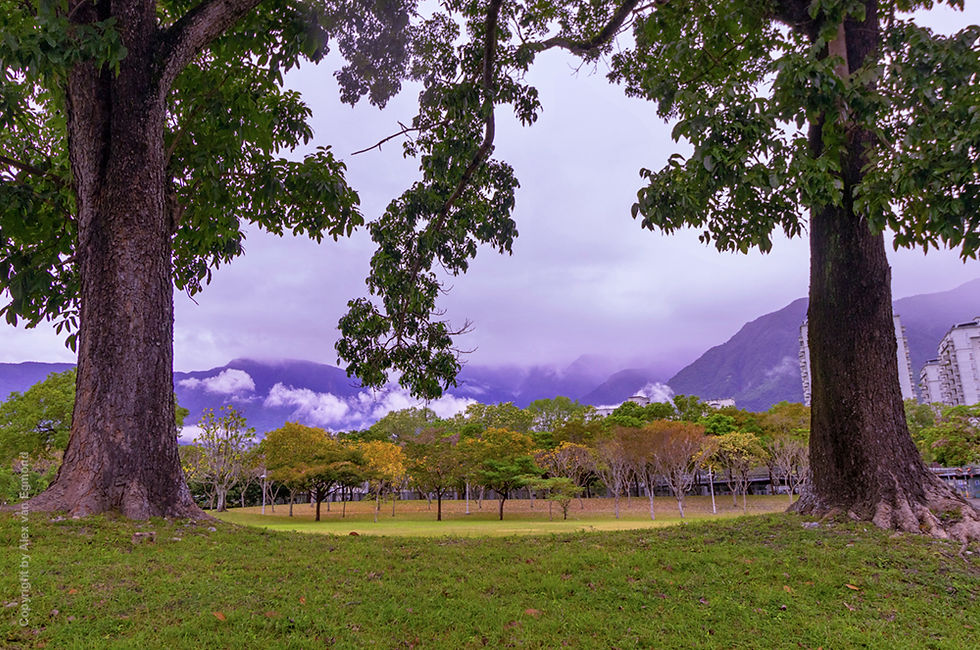
Upon inquiry, it was revealed that the blood came from an indigenous woman who had limped to the clinic with family members from the mountains, an eight-hour journey. The family was unable to pay the required registration fees, and the injured woman had to turn back without receiving care.
This suffering deeply moved Cheng Yen, and she began to wonder what her group could do to help. In the same year, she also had a meeting with three Catholic nuns who tried to convert her.
They were unsuccessful, but their question about why Buddhists were not involved in charity, such as caring for the poor or establishing hospitals, led to deep self-reflection.
Cheng Yen knew that Siddhartha Gautama Buddha, often regarded as the founder of Buddhism, considered compassion the highest virtue.
She reasoned that compassion did not only mean sympathy for the suffering of others, but also concrete action to alleviate that suffering. Siddhartha himself says in his teachings:
‘What is goodness? Answer: The performance of a merciful act’.
Thus, in May 1966, the Tzu Chi Charity Foundation was established with the mission to serve society.
Cheng Yen conceived the idea that if she, her five disciples, and her thirty housewives donated one penny per day from their change after shopping—an amount seemingly insignificant at first glance—it would be enough over the course of a year to cover the registration fees for that indigenous woman.

It was still a drop in the ocean, of course, but the idea caught on. Donations could be placed in small, bamboo-made piggy banks, which were distributed by supporters and, naturally, emptied at regular intervals.
The philosophy behind these so-called 'bamboo piggy banks is that it is not the size of the donation, but the act of giving itself that holds significance. As a result, the involvement of volunteers is of great importance, as they are the ones who sacrifice their time and energy for the organization.
By 2023, Tzu Chi reportedly had nearly ninety million official volunteers in 68 countries, most of whom appeared to be drawn to Buddhism, though this is not a necessity.
One can become an official volunteer after a two-year training period and by adhering to the ten precepts of the organization.
These precepts reveal the Taiwanese origin of Tzu Chi, as they include not only prohibitions against killing, stealing, or consuming alcohol, but also a ban on chewing betel nuts (a legal drug in Taiwan) and a strong request to follow traffic rules.
Attraction
After more than half a century, Tzu Chi has grown into a massive charitable organization primarily focused on poverty alleviation, healthcare, and disaster relief.
In 2023, the organization had a revenue of over $294 million, which was even larger than the revenue of Taipei, the capital of Taiwan.
Remarkably, the majority of volunteers in the first decades were women. Although the gender ratio has since become more balanced, it raises questions about the attraction of the organization.
On one hand, the activities of the organization provide an outlet for women who find themselves in difficult home situations. Participation gives them a sense of self-worth outside the home, and during the activities, they can also receive support from other participants.

Additionally, Tzu Chi benefited from the prosperity that began in Taiwan during the 1980s. Women from the emerging middle class had more time and opportunities, but were still trapped in traditional Chinese family patterns.
Through volunteer work, they could adopt a new identity and extend their role as mothers to the world. A quote from a participant on the official website speaks volumes:
'I had two children whom I smothered with excessive love. I was never satisfied with this unhealthy love. But now I have so many children. I consider everyone I help as my own child'.
However, engaging in society can also be confronting, as another well-off participant experienced after visiting a poor family.
'I cried the entire way home. I had never imagined such poverty. I always only cared about my luxurious lifestyle. I never cared about others or what was happening in society'.
Confessions like these from participants are typical of the organization’s public relations. The focus is not on promoting Buddhist philosophy or other intellectual discussions, but on concrete action in the real world, and that is the great attraction of Tzu Chi for both women and men.
The central figure of the organization is still the charismatic Cheng Yen, who addresses her volunteers daily on the organization's own television channel, Da Ai (Great Love). The overarching mission is to give, as it is a life task that leads to a happier existence, as Cheng Yen says:
‘When we give selflessly, we feel that our life is real and meaningful'.
Official website: https://global.tzuchi.org/
※※※
Controversy
Over the years, the Tzu Chi Foundation has become one of the largest landowners in Taiwan, which accompanies responsibilities. In 2015, the organization faced criticism due to plans to repurpose a 4.4-hectare area for development.
Environmental activists criticized this proposal because the site was a former pond area that the foundation had allegedly illegally drained, increasing the risk of flooding on nearby farmland.

Experts also pointed to the potential presence of dip slopes in the area, which could lead to landslides. In response to public outrage, Tzu Chi withdrew the proposal, pending societal consensus on the project.
Furthermore, the foundation was criticized for its lack of transparency in financial management and investment practices. Although Tzu Chi receives significant amounts of donations for its charitable work, it was noted that the organization was not always clear about how these funds were managed and invested.
Bert Lim, chairman of the Taiwanese think tank World Economics Society, highlighted the following example:
'There [...] was a substantial amount of donations made without receipts, for example by tourists visiting Tzu Chi sites, as well as the revenue generated by the ten hospitals Tzu Chi operates in Taiwan'.
Despite the foundation's noble goals, there was a need for greater transparency and accountability. To maintain public trust, the organization has since begun publishing its annual financial reports.
※※※



Comments